How to Build Your Street Art Portfolio: Tips from Professional Muralists
8 months ago
- Why a Strong Art Portfolio Matters
- Step 1: Document Your Work Professionally
- Step 2: Show Your Creative Process
- Step 3: Organize by Project, Not Random Images
- Step 4: Highlight Versatility and Scale
- Step 5: Include Urban Context
- Step 6: Build a Clear Online Presence
- Step 7: Develop a Strong Artist Statement
- Step 8: Include Credentials and Collaborations
- Step 9: Keep It Updated
- Common Mistakes to Avoid
- From Portfolio to Paid Commission
- Conclusion
- Frequently Asked Questions (FAQ)
In today’s competitive creative landscape, talent alone is not enough. Whether you aim to secure public commissions, collaborate with brands, or apply for artist residencies, a strong Art Portfolio is essential. For street artists and muralists, building a compelling portfolio requires more than uploading a few photos—it demands strategic documentation, clear presentation, and professional positioning.
Unlike studio artists, muralists work in dynamic environments where lighting, scale, and urban context shape perception. Your portfolio must communicate not only aesthetic quality but also technical competence, reliability, and adaptability.
This comprehensive guide shares practical insights inspired by professional muralists to help you create a portfolio that attracts curators, city programs, and potential clients.
Why a Strong Art Portfolio Matters
A portfolio serves multiple purposes:
- Showcasing artistic identity
- Demonstrating technical skill
- Highlighting completed projects
- Building credibility with institutions
- Securing paid commissions
As street art continues to gain institutional recognition—explored in our article on From Anonymity to Recognition—professional presentation has become increasingly important.
Your portfolio is not merely an archive. It is a curated narrative of your artistic journey.
Step 1: Document Your Work Professionally
High-quality documentation is the foundation of an effective Art Portfolio. Because murals are site-specific and often large-scale, capturing them properly is crucial.
Photography Best Practices
- Use a high-resolution camera
- Shoot during natural daylight
- Capture full-wall and detail shots
- Include context images showing scale
- Avoid heavy filters or distortions
Professional muralists often photograph projects at multiple stages: sketch, progress, and final result. This demonstrates process transparency and technical competence.
Step 2: Show Your Creative Process
Clients and curators value insight into how ideas develop. Include:
- Concept sketches
- Digital mockups
- Color studies
- Material selection explanations
Understanding materials is particularly important in large-scale work. Our guide on Materials and Drawing Techniques explores how surface preparation and paint choice impact durability.
Demonstrating technical knowledge reinforces your professional credibility.
Step 3: Organize by Project, Not Random Images
A common mistake is presenting disconnected images without context. Instead, structure your Art Portfolio around complete projects.
Each Project Section Should Include:
- Project title
- Location (city, neighborhood)
- Year completed
- Client or commissioning body (if applicable)
- Brief concept explanation
- Final images
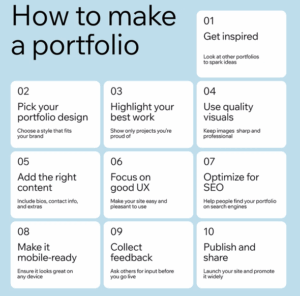
This structure allows viewers to understand the scope and impact of each mural rather than seeing isolated visuals.
Step 4: Highlight Versatility and Scale
Professional muralists often work across various formats:
- Community murals
- Commercial walls
- Festival installations
- Interactive or digital components
Including diverse examples demonstrates adaptability. For instance, if you have experimented with digital overlays or projection, referencing evolving formats discussed in Projection Mapping can show awareness of contemporary trends.
Step 5: Include Urban Context
Street art exists within public space. Showing environmental context adds narrative depth. Capture:
- Pedestrians interacting with the mural
- Architectural surroundings
- Day vs. night variations
Neighborhoods known for vibrant street culture—such as Shoreditch in London—demonstrate how context shapes perception. (See our overview of Street Art in Shoreditch for reference.)
Contextual documentation communicates scale and social engagement.
Step 6: Build a Clear Online Presence
Today, most curators and clients review digital portfolios. Your website should:
- Load quickly
- Be mobile-friendly
- Include contact information
- Provide an artist statement
- Contain downloadable PDF versions for proposals
A dedicated domain conveys professionalism. Social media profiles can supplement—but should not replace—a structured portfolio website.
Step 7: Develop a Strong Artist Statement
Your statement explains your vision, influences, and thematic focus. Keep it concise yet meaningful.
If your work engages social themes, consider referencing how urban art contributes to civic dialogue. A compelling statement strengthens emotional and intellectual connection with your audience.
Step 8: Include Credentials and Collaborations
Professional muralists often list:
- Public commissions
- Residencies
- Festival participation
- Media features
- Partnerships
Step 9: Keep It Updated
An outdated Art Portfolio can undermine opportunities. Update it regularly with:
- Recent projects
- Improved documentation
- New collaborations
- Press mentions
Remove early works that no longer reflect your skill level or artistic direction.
Common Mistakes to Avoid
- Overloading with too many images
- Poor lighting or blurry photos
- Lack of project descriptions
- Inconsistent branding
- No clear contact information
Clarity and coherence are more impactful than volume.
From Portfolio to Paid Commission
Once your portfolio is structured professionally, you can use it to:
- Apply for city mural programs
- Pitch to businesses
- Submit to art festivals
- Approach galleries or cultural institutions
A well-designed Art Portfolio communicates not only creativity but also professionalism and accountability—qualities essential for large-scale public projects.
Conclusion
Building a compelling Art Portfolio as a street artist requires strategic curation, technical documentation, and narrative clarity. Beyond showcasing visual talent, it should communicate reliability, conceptual depth, and adaptability to different environments.
Professional muralists understand that their portfolio is both an artistic archive and a business tool. By documenting projects carefully, organizing them thoughtfully, and presenting them through a polished digital platform, you position yourself for sustainable growth in the evolving world of urban art.
In a field where walls speak loudly, your portfolio ensures your voice is heard clearly.
Frequently Asked Questions (FAQ)
What should an Art Portfolio include?
High-quality images, project details, artist statement, and contact information.
How many projects should I show?
Focus on 8–15 strong projects rather than including every piece you’ve created.
Should I include unfinished murals?
Only if they demonstrate process or technical development clearly.
No, a dedicated website provides better organization and professionalism.
How often should I update my portfolio?
Ideally every few months or after completing significant new projects.
Leave a Reply