Projection Mapping: From Static Murals to Dynamic Urban Displays
8 months ago · Updated 8 months ago

- What Is Projection Mapping?
- From Static Murals to Digital Layers
- The Creative Process Behind Urban Mapping
- Mapping as Urban Storytelling
- Activism and Projection Mapping
- Immersive Urban Experiences
- Technical Challenges of Urban Mapping
- Sustainability Considerations
- Temporary vs. Permanent Urban Displays
- The Future of Mapping in Urban Art
- Frequently Asked Questions (FAQ)
Urban art is no longer limited to paint and concrete. With the rise of digital technologies, mapping techniques—particularly —have transformed buildings, monuments, and murals into immersive, moving canvases. What was once static can now shift, pulse, and respond to sound, light, and audience interaction.
Projection represents a powerful intersection between street art, architecture, and digital design. By overlaying animated visuals onto physical surfaces, artists expand storytelling possibilities while redefining public space. This evolution signals a broader shift in how cities experience visual culture.
This comprehensive guide explores how projection mapping works, its artistic applications, technical process, sustainability considerations, and its growing role in contemporary urban displays.
What Is Projection Mapping?
Projection mapping is a digital technique that uses high-lumen projectors to display animated or static visuals onto irregular surfaces—such as building facades, bridges, or sculptures—precisely aligned with their architectural contours.
Unlike traditional projection onto flat screens, adapts content to three-dimensional structures. Software calibrates the image so it appears integrated into the surface, creating illusions of depth, motion, and transformation.
Core Components of Projection Mapping
- High-resolution projectors
- 3D modeling software
- Media servers
- Sound synchronization systems
- Precise surface measurements
The result is an urban spectacle that can temporarily reshape an entire cityscape.

From Static Murals to Digital Layers
Traditional murals rely on permanence. Projection introduces temporality. Instead of altering a wall physically, artists can overlay motion graphics that disappear once the equipment is removed.
This shift expands the possibilities of urban creativity. As discussed in our article on From Mural to Metaverse, digital innovation allows artists to explore new dimensions without permanently modifying architecture.
Mapping can enhance existing murals, animating painted figures or adding narrative sequences. It can also transform blank walls into fully immersive digital experiences.
The Creative Process Behind Urban Mapping
1. Site Analysis
Artists begin by photographing and scanning the building surface. Architectural details—windows, columns, textures—must be precisely measured.
2. 3D Modeling
The structure is recreated digitally using modeling software. This model becomes the foundation for animation design.
3. Visual Design and Animation
Designers create motion graphics that align with the surface geometry. Illusions such as collapsing facades or expanding portals rely on precise alignment.
4. Calibration and Testing
On-site adjustments ensure accurate alignment and brightness control.
This technical workflow blends artistic vision with architectural precision, making mapping a multidisciplinary practice.
Mapping as Urban Storytelling
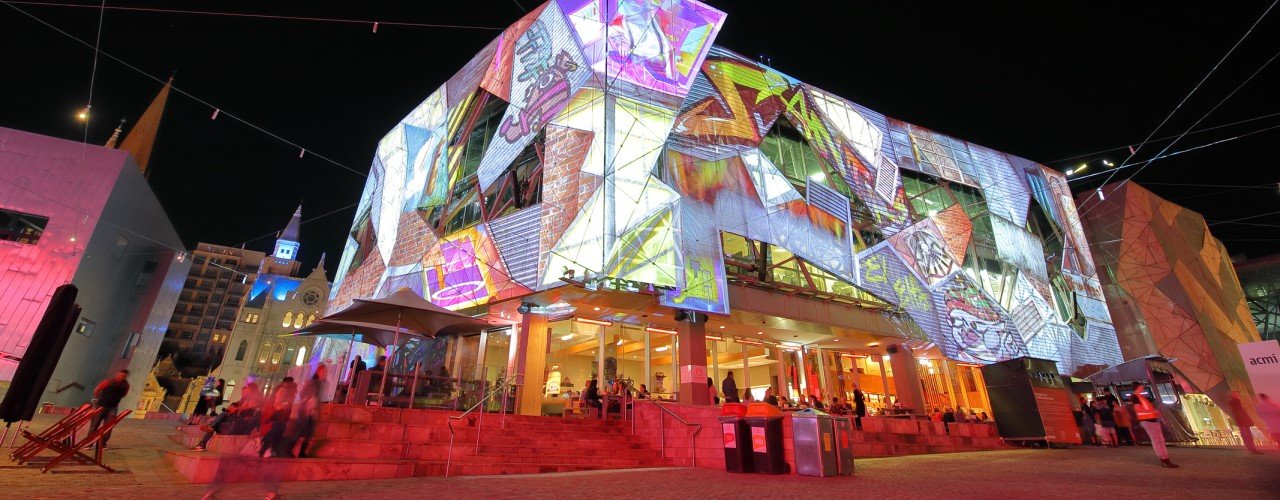
Projection mapping allows artists to address social, historical, and political themes in visually compelling ways. Entire buildings can become narrative canvases, displaying sequences that explore identity, memory, or environmental awareness.
Because the medium is temporary, it enables bold experimentation while minimizing long-term risk.
Activism and Projection Mapping
Has also emerged as a powerful tool for visual protest. Activist groups can project messages onto government buildings or corporate headquarters without permanent intervention.
This approach aligns with broader discussions about urban art as civic expression, explored in our analysis of Urban Art as a Tool for Social Change.
Digital projection allows messages to appear suddenly, attract attention, and vanish—leaving a lasting symbolic impact without physical alteration.
Immersive Urban Experiences
Projection often integrates sound design and interactive elements, creating immersive public experiences. Large-scale festivals transform city centers into temporary open-air digital galleries.
As detailed in our exploration of Immersive Installations, audiences increasingly seek multisensory engagement rather than passive viewing.
Interactive mapping can respond to crowd movement, live music, or environmental data—blurring the boundary between spectator and participant.
Technical Challenges of Urban Mapping
Brightness and Ambient Light
Urban environments often contain competing light sources. High-lumen projectors are necessary to maintain visibility.
Surface Texture
Brick, glass, and concrete each reflect light differently, requiring calibration adjustments.
Weather Conditions
Outdoor projections must account for rain, humidity, and temperature changes.
Power Supply
Large installations demand stable energy sources and safety protocols.
Overcoming these challenges requires collaboration between digital artists, engineers, and event organizers.
Sustainability Considerations
While projection mapping avoids permanent paint application, it does consume electricity and equipment resources. Sustainable practices include:
- Using LED-based projection systems
- Integrating solar power sources
- Limiting projection duration
- Employing energy-efficient servers
These strategies align with environmentally conscious approaches discussed in our article on Eco-Friendly Materials for Sustainable Street Art.
Digital innovation should evolve alongside ecological responsibility.
Temporary vs. Permanent Urban Displays
Unlike murals that may remain for years, projection installations are typically temporary. This temporality offers advantages:
- No structural alteration
- Reduced legal conflicts
- Flexibility for thematic updates
- Lower material waste
However, the fleeting nature means documentation is essential. Photographs, video recordings, and technical descriptions preserve the experience for research and archival purposes.
The Future of Mapping in Urban Art
Advancements in augmented reality (AR), real-time rendering engines, and interactive sensors will likely expand mapping capabilities.
Future directions include:
- AI-generated visuals responding to live data
- Augmented overlays accessible via smartphones
- Hybrid mural-projection collaborations
- City-wide synchronized projection events
As digital literacy increases, projection may become a standard component of urban cultural programming.
Projection mapping represents a transformative evolution in urban art. By shifting from static murals to dynamic displays, artists redefine how public space is experienced and interpreted. Buildings become temporary storytellers, surfaces become animated, and audiences become participants.
While technical and logistical challenges remain, continues to expand creative possibilities without permanently altering architecture. It reflects a broader movement toward hybrid artistic practices that merge physical space with digital innovation.
In the evolving landscape of contemporary cities, projection mapping stands as a powerful symbol of how technology can amplify artistic expression while preserving urban integrity.
Frequently Asked Questions (FAQ)
What is projection mapping in street art?
It is a technique that projects animated visuals onto buildings or surfaces aligned to their architectural shape.
Is projection mapping permanent?
No, it is typically temporary and disappears once the equipment is removed.
Does projection mapping damage buildings?
No physical alteration occurs, making it non-invasive when properly executed.
Can mapping be used for activism?
Yes, it allows temporary projection of social or political messages onto public structures.
Is projection mapping environmentally friendly?
It avoids paint use but requires energy; sustainable setups can reduce environmental impact.
Leave a Reply